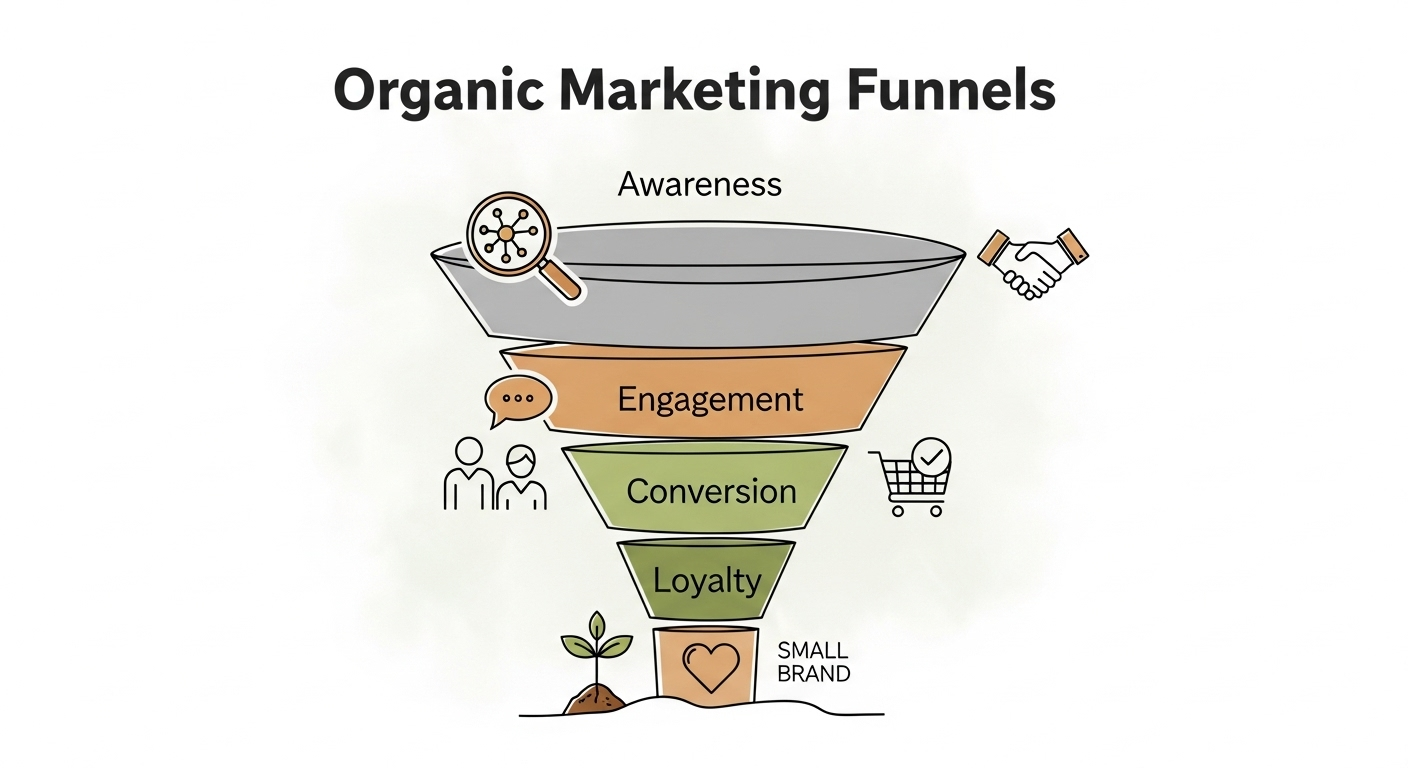
Organic Marketing Funnels are powerful systems that help small brands attract, engage, and convert customers without spending heavily on paid advertising. They focus on building genuine relationships through valuable content, trust, and consistency. Instead of pushing for quick sales, organic funnels guide people naturally through each stage from discovering your brand to becoming repeat customers who truly believe in what you offer.
In this guide, you’ll learn how to create Organic Marketing Funnels that boost sales and build trust naturally. You’ll discover how to attract the right audience, nurture leads with authentic engagement, and convert them into loyal customers using SEO, content marketing, email sequences, and social media all without relying on paid ads.
Stages of an Organic Marketing Funnel
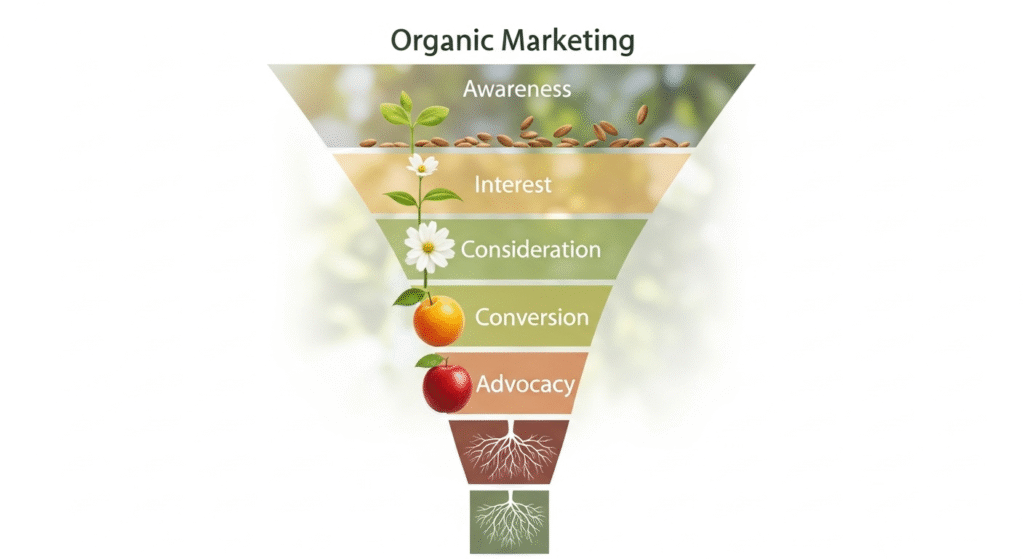
Organic Marketing Funnels guide potential customers through four essential stages: awareness, consideration, conversion, and retention.
In the awareness stage, the goal is to attract attention by creating valuable, shareable content. This can include blog posts, social media videos, or infographics that solve problems your audience faces. The focus is on visibility and helping people discover your brand naturally, without relying on paid ads. Consistent posting and SEO optimization ensure that your brand shows up when people search for related topics.
During the consideration stage, the priority shifts to building trust. You do this by educating your audience through newsletters, tutorials, webinars, or behind-the-scenes stories. The more value you provide, the more credible your brand becomes. Authentic engagement through comments, discussions, and community interaction plays a key role in nurturing leads.
The conversion stage transforms followers into customers. At this point, your audience already trusts you, so offering helpful resources, exclusive deals, or personalized email campaigns can motivate them to buy. Avoid hard selling, focus on how your product solves a specific need.
Core Elements of an Effective Organic Marketing Funnel
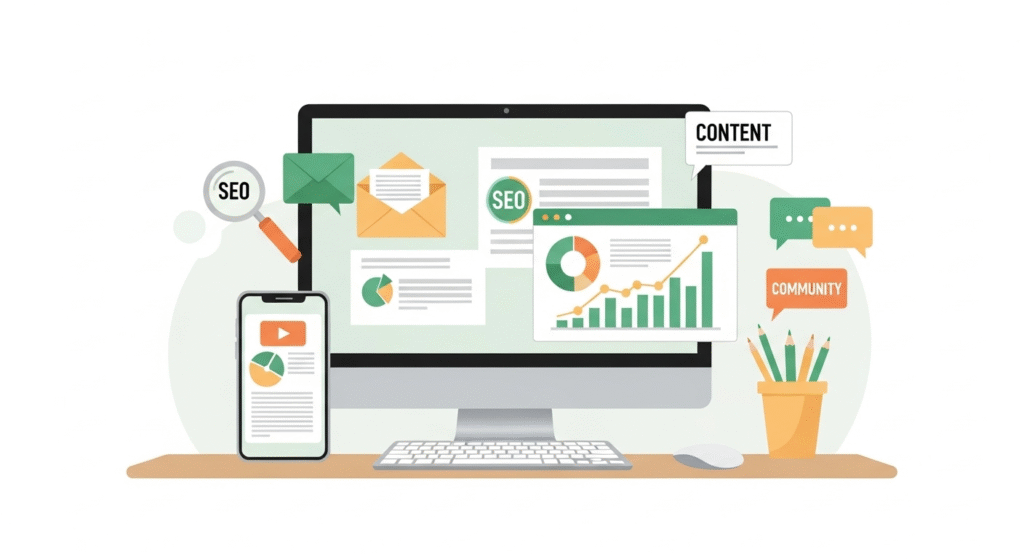
An effective Organic Marketing Funnel combines strategic content creation, SEO, email nurturing, and authentic social proof.
The first pillar is content creation, blogs, short videos, and storytelling on social media. High-value content attracts the right audience and builds trust over time. Consistency is key; every post should educate, inspire, or solve a problem your ideal customer faces.
The second element is a strong SEO and keyword strategy. This ensures your content ranks high in search results, helping people find your brand naturally. Conduct keyword research to target specific phrases your audience searches for, and integrate them seamlessly into your blog titles, captions, and descriptions.
Next, focus on email nurturing and community building. Use emails to provide helpful insights, share customer success stories, and guide subscribers through your funnel. Building a community around your brand fosters loyalty and keeps your audience engaged between purchases.
Lastly, add social proof and user-generated content (UGC). Customer reviews, testimonials, and tagged posts from real users create authenticity. People trust other customers more than ads, and this credibility strengthens your funnel’s impact. When all these elements align, Organic Marketing Funnels work seamlessly to attract, convert, and retain customers.
Building an Organic Marketing Funnel for Small Brands

For small businesses, building Organic Marketing Funnels from scratch begins with understanding your audience and setting clear goals.
Start by identifying your ideal customer’s needs and pain points. Then, create a step-by-step funnel beginning with awareness such as blog posts or social content that educates and entertains. Use storytelling to show your brand’s mission and values.
Next, move into the consideration phase by offering deeper engagement opportunities like newsletters, free guides, or community groups. These build familiarity and keep your brand top-of-mind.
Choosing the right platforms is crucial. Focus your efforts where your audience already spends time — for instance, Instagram or YouTube for lifestyle brands, LinkedIn for B2B services, or Pinterest for product-based businesses. Spreading too thin across multiple platforms can dilute your message.
Ensure your funnel aligns with your brand voice and mission. Consistency across tone, visuals, and messaging helps your audience trust your authenticity. Integrate tools like email marketing software, CRM systems, and analytics dashboards to measure performance and refine your approach.
Strategies to Boost Sales Naturally Through Organic Marketing Funnels
Growing sales through Organic Marketing Funnels doesn’t require expensive ads. It’s about strategic value delivery and relationship building.
Start by leveraging educational content. Create tutorials, blog posts, or short-form videos that guide customers toward understanding your product’s benefits. Education builds authority and helps potential buyers make informed decisions.
Use lead magnets such as free eBooks, templates, or checklists to capture email addresses and continue nurturing leads. Provide genuine value upfront to establish credibility. Once subscribers engage, guide them through email sequences that showcase your brand’s solutions and success stories.
Avoid pushy sales tactics instead, focus on relationship-driven selling. Share case studies or testimonials showing how your products or services improved someone’s life or business. Transparency and authenticity are key to natural conversions.
To enhance results, study case studies of small brands that have grown organically through consistent social engagement and SEO. Many started with small followings but built trust by offering continuous value.
Building Trust Through Authentic Brand Communication

Building trust is the foundation of successful Organic Marketing Funnels, and authentic brand communication makes that possible. Today’s customers are drawn to real stories and transparent messaging not polished sales pitches. The most effective brands use storytelling to show their journey, values, and the people behind the product. Sharing personal experiences, customer success stories, or behind-the-scenes moments builds emotional connections and long-term loyalty.
Storytelling plays a major role in creating brand loyalty. It helps people relate to your business, making your brand feel more human and trustworthy. When your audience sees themselves in your story, they develop a deeper connection that encourages engagement and repeat purchases.
Transparency and social responsibility also strengthen Organic Marketing Funnels. Be open about your brand’s values, sourcing, and production methods. Customers appreciate honesty and prefer brands that are socially and environmentally responsible. Whether it’s reducing packaging waste or supporting local communities, these actions show that you care about more than profits.
Another key element is responding to customer feedback. Engage with comments, reviews, and direct messages promptly. Show gratitude for positive feedback and professionalism when addressing concerns. Active engagement proves that your brand listens and values its customers.
Tools and Platforms to Manage Your Organic Marketing Funnel
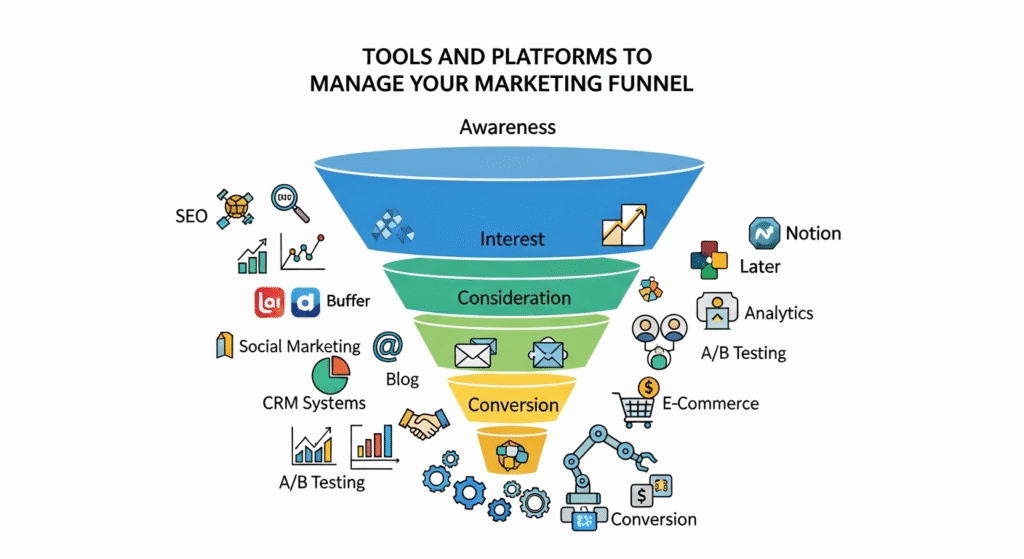
To make Organic Marketing Funnels efficient and scalable, using the right tools is essential. These platforms help you automate processes, manage leads, and track results so you can focus on building stronger relationships.
Start with analytics and SEO tools like Google Analytics, Ahrefs, or SEMrush. These help you measure traffic, monitor keyword rankings, and understand which content attracts the most engagement. With these insights, you can refine your organic strategy to target your ideal audience more effectively.
Next, use CRM systems such as HubSpot, GoHighLevel, or Zoho CRM for lead nurturing. These tools organize customer data, automate follow-ups, and help maintain consistent communication across every stage of your funnel. A well-integrated CRM ensures no lead is forgotten and every prospect receives the attention they deserve.
Automation tools like Zapier or ActiveCampaign streamline repetitive tasks such as sending emails, tagging leads, or posting updates. This saves time while keeping your funnel running smoothly.
For social media and content planning, platforms like Buffer, Later, or Notion help you schedule posts and maintain a cohesive online presence. Consistency is crucial in Organic Marketing Funnels, and these tools ensure your message reaches your audience regularly.
Measuring the Success of Your Organic Marketing Funnel
Tracking and analyzing performance is vital to improving Organic Marketing Funnels. Without measurable data, it’s hard to know what’s working and what needs adjustment. Begin by identifying key metrics such as engagement, conversion, and retention. Engagement includes likes, shares, comments, and time spent on your content — all indicators of audience interest.
Next, measure conversion rates. Track how many people move from awareness to purchase or sign up for your email list. A higher conversion rate suggests that your content and calls-to-action are resonating with your audience.
Retention is another major factor. Strong Organic Marketing Funnels don’t just attract new customers; they keep existing ones coming back. Monitor repeat purchases, subscription renewals, and ongoing engagement to evaluate long-term loyalty.
Use analytics tools like Google Analytics, HubSpot, or GoHighLevel dashboards to visualize data and spot patterns. Identify which content types or platforms generate the best results, then focus more effort there.
Conclusion
Building successful Organic Marketing Funnels takes time, consistency, and authenticity but the rewards are worth it. By focusing on valuable content, genuine engagement, and customer trust, small brands can grow naturally without heavy ad spending. Each stage of the funnel, from awareness to retention, plays a vital role in guiding customers through a seamless journey that feels personal and rewarding. With the right tools, strategy, and mindset, your Organic Marketing Funnels can become a sustainable system for boosting sales and brand loyalty. Keep testing, improving, and communicating openly with your audience to create long-term growth built on trust and real connections.
FAQs
What are Organic Marketing Funnels and how do they differ from paid funnels?
Organic Marketing Funnels focus on attracting and converting customers naturally through valuable content, SEO, and engagement instead of paid ads. They rely on building trust, credibility, and relationships over time. Unlike paid funnels, which bring quick but temporary results, organic funnels create sustainable growth by nurturing loyal customers who genuinely connect with your brand and continue supporting it long-term.
How long does it take for Organic Marketing Funnels to show results?
Results from Organic Marketing Funnels usually take time, often between three to six months. It depends on your consistency, content quality, and audience engagement. Since organic growth relies on trust and relationships, you won’t see instant results like paid ads. However, once your content gains traction, it creates steady, long-term visibility and sales, delivering higher returns without ongoing ad expenses or constant promotion efforts.
Can small brands use Organic Marketing Funnels effectively without a big team?
Yes, small brands can absolutely use Organic Marketing Funnels effectively. You don’t need a large team, just clear goals, good content, and consistency. Focus on platforms where your audience is most active, and automate repetitive tasks like scheduling and email nurturing. With smart planning and authenticity, even solo entrepreneurs can build strong, long-lasting customer relationships and grow their sales organically without big budgets.
What type of content works best for Organic Marketing Funnels?
The best content for Organic Marketing Funnels includes educational blogs, engaging videos, helpful social media posts, and authentic customer stories. The goal is to provide real value and solve your audience’s problems. Content that educates, inspires, or entertains performs best because it builds trust and encourages natural engagement, helping your audience move from awareness to conversion smoothly.