
Business on Pinterest is growing faster than ever, making it one of the most powerful platforms for entrepreneurs, small business owners, and brands. With millions of users searching daily for ideas, products, and inspiration, Pinterest offers unique opportunities to reach potential customers. Unlike other social media platforms, Pinterest works like a visual search engine, helping businesses showcase their products and drive consistent traffic.
In this guide, you’ll discover a clear step-by-step approach to grow your brand and increase visibility on Pinterest. From setting up a business account to creating eye-catching pins, organizing boards, and using analytics, you’ll learn practical strategies to boost growth and sales.
Step 1: Set Up a Business Account

When starting a business on Pinterest, the first step is to create or switch to a business account. Unlike a personal account, a business account gives you access to advanced tools such as analytics, ads, and performance insights. These features help you understand how people engage with your content and allow you to run promotions to reach a wider audience.
To set up, you can either create a new business account directly or convert your personal account in just a few clicks. Pinterest guides you through the process with simple steps, including entering your business name, website, and industry type. By doing this, you present your brand as professional and trustworthy.
The biggest advantage of having a business account is access to analytics. You’ll be able to see which pins perform best, what your audience is searching for, and how much traffic Pinterest sends to your website. Ads are another powerful option, allowing you to promote your products directly to your target audience.
Step 2: Optimize Your Profile

Once you’ve set up your account, the next step to grow your business on Pinterest is optimizing your profile. This is often the first impression new visitors have of your brand, so it needs to be clear, professional, and keyword-friendly.
Start with your profile picture or logo. If you’re a brand, a clean logo works best. If you’re a personal business, a professional headshot makes your account feel trustworthy. Next, write a keyword-rich bio that explains what your business offers. Focus on the words your audience might search for, such as “handmade jewelry,” “digital marketing tips,” or “healthy recipes.”
Don’t forget to add your website link. Claiming your domain not only builds credibility but also allows Pinterest to track traffic and engagement from your pins. This simple step connects your pins directly to your website, boosting visibility.
Step 3: Research and Use Pinterest SEO
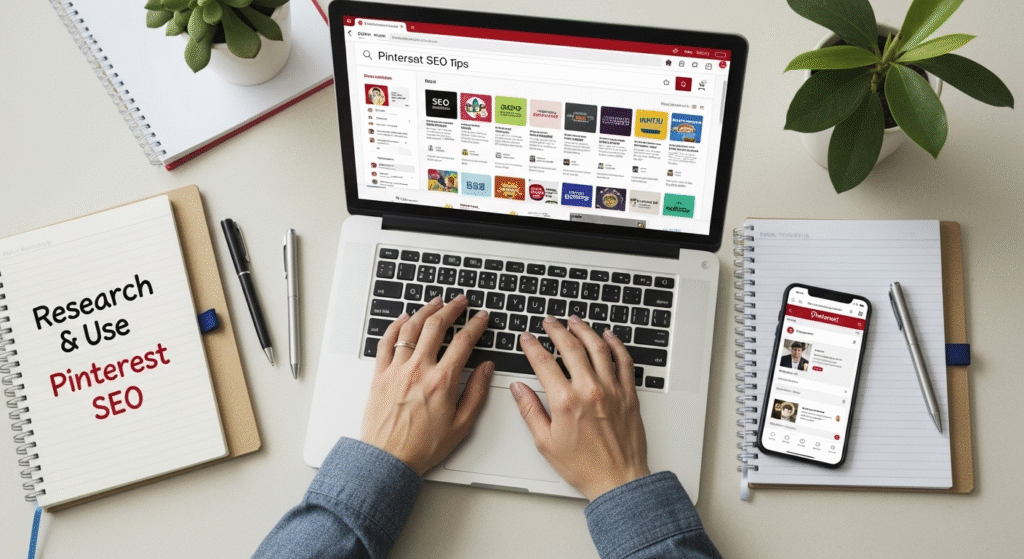
To successfully grow your business on Pinterest, you need to understand how Pinterest SEO works. Unlike other social platforms, Pinterest acts as a visual search engine, meaning keywords are the main driver of discovery. Without them, your pins won’t reach the right audience.
Start by researching trending keywords. Use Pinterest’s search bar to see auto-suggestions, check “Trends” in the analytics section, or explore what competitors in your niche are using. Once you have a list of relevant keywords, sprinkle them naturally into your profile bio, board titles, pin titles, and descriptions.
For example, if your business sells skincare products, keywords like “natural skincare,” “DIY face masks,” or “glowing skin tips” can attract the right audience. The key is to match your content with what people are already searching for.
Step 4: Create Engaging and Branded Pins
The heart of growing a business on Pinterest is creating engaging, branded pins that capture attention. Since Pinterest is a visual platform, high-quality images are essential. Use clear, bright pictures that showcase your product or service in the best way possible.
There are different types of pins you can create: standard pins with static images, idea pins with step-by-step guides, and video pins for storytelling or tutorials. Experimenting with these formats helps you discover what resonates most with your audience.
Brand consistency is also key. Use the same colors, fonts, and logo across all your pins to make your brand recognizable. Adding text overlays with compelling titles makes your pins stand out and communicates the value instantly. For example, a pin that says “5 Easy Dinner Recipes” will attract more clicks than just a photo of food.
Step 5: Organize Boards Strategically
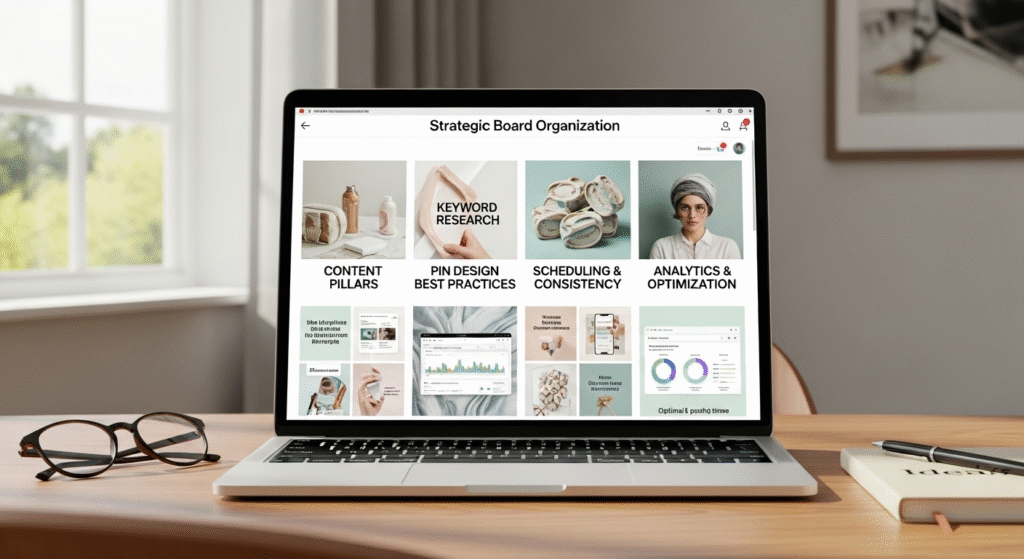
Organizing boards is one of the most effective ways to grow your business on Pinterest. Boards act like categories, helping users easily find the type of content they’re looking for. When creating boards, think about your niche and subtopics. For example, if you sell fitness products, you can create boards like “Home Workouts,” “Healthy Meal Ideas,” or “Fitness Motivation.”
Each board should have a clear, keyword-rich description. Use relevant phrases that people might search for. For example, instead of writing “Recipes,” write “Quick and Healthy Dinner Recipes for Busy Families.” This helps Pinterest understand what your board is about, increasing your chances of ranking in search results.
Visual consistency is also important. Use similar cover images, fonts, or colors so your boards reflect your brand identity. This makes your profile look professional and appealing to new visitors.
Step 6: Post Consistently with a Schedule
Consistency is the secret to long-term success when growing a business on Pinterest. Posting randomly won’t build momentum. Instead, aim to pin daily, even if it’s just a few times. Pinterest’s algorithm favors consistent activity over bulk uploads.
The best times to pin are typically in the evenings or weekends when users are most active, but this can vary depending on your audience. Tools like Tailwind and Pinterest Scheduler help you plan content in advance, ensuring your pins go live at the right times.
Scheduling also frees up your time, allowing you to focus on other parts of your business. Instead of spending hours every day pinning manually, you can create a week’s worth of content in one sitting.
Step 7: Leverage Analytics to Improve
One of the biggest advantages of having a business on Pinterest is access to analytics. These insights show you exactly how your pins are performing and help you improve your strategy.
Key metrics to track include impressions (how many people see your pins), saves (how many users bookmark your content), and clicks (how many people visit your website). These numbers reveal which pins attract attention and which ones convert traffic into action.
By studying analytics, you can identify patterns. For example, you might notice that video pins perform better than standard images, or that recipes with “quick” in the title get more clicks. This allows you to create more of what your audience wants.
Step 8: Use Pinterest Ads (Optional but Powerful)
Pinterest ads, also known as promoted pins, are a powerful way to grow your business on Pinterest faster. Unlike organic pins, ads put your content directly in front of your target audience, even if they don’t follow you yet.
The main benefit of Pinterest ads is visibility. Your pins appear in search results, feeds, and related pin sections, reaching users who are already searching for similar products. For example, if you sell handmade candles, your ads can appear when someone searches for “home décor ideas.”
Budgeting for ads is flexible, you can start small and scale up as you see results. Pinterest also offers advanced targeting options, letting you reach people based on their interests, demographics, and search behaviors.
Step 9: Collaborate and Engage
Collaboration and engagement play a huge role in building your business on Pinterest. Joining group boards or Tailwind Tribes expands your reach by allowing your content to appear in front of a wider audience. Cross-promoting with influencers or partners in your niche is another powerful way to grow. For instance, if you run a home décor business, you could collaborate with lifestyle bloggers who already have an audience interested in design.
Engaging with your followers is equally important, respond to comments, thank users for repins, and interact with your community. This builds trust and positions your business on Pinterest as approachable and reliable. The more genuine connections you create, the more loyal followers and potential customers you’ll gain.
Step 10: Drive Traffic and Convert
At the end of the day, the goal of your business on Pinterest is not just visibility but traffic and conversions. Always link your pins to valuable destinations like landing pages, blogs, or product shops. A beautiful pin without a link is a missed opportunity. To maximize conversions, include strong calls-to-action (CTAs) such as “Shop Now,” “Learn More,” or “Read the Full Guide.” Make sure the landing page matches the promise of the pin to keep users engaged.
Beyond that, integrate Pinterest into your overall marketing funnel, collect emails, promote offers, or retarget users with ads. By aligning Pinterest with your broader business strategy, you can turn casual browsers into loyal customers, making your business on Pinterest a consistent source of growth.
Conclusion
Growing a business on Pinterest in 2025 is not just about posting attractive images. It’s about building a smart, consistent strategy that drives real results. By setting up a proper business account, optimizing your profile, using Pinterest SEO, and creating branded, engaging pins, you can reach a wide audience ready to take action. Adding consistency, analytics, and optional ads makes your approach even more effective. With the right mix of creativity and strategy, any entrepreneur can use Pinterest as a growth engine. Stay active, keep learning, and refine your methods. The platform offers endless opportunities to turn inspiration into lasting success.
FAQs
How can a beginner start a business on Pinterest effectively?
Starting a business on Pinterest as a beginner is simple if you focus on the basics. First, set up a business account to access analytics and ad tools. Then, optimize your profile with a clear logo, keyword-rich bio, and verified website. Begin creating boards around your niche, using high-quality pins with proper keywords. Consistency matters, so schedule regular posts and track analytics to learn what works. Over time, you’ll see steady growth in traffic and engagement.
Is Pinterest better for product-based businesses or service providers?
A business on Pinterest can succeed whether it’s product-based or service-oriented. Product sellers benefit from visual pins showcasing items linked to online stores, while service providers can share educational content, guides, and tips. Pinterest users often search for solutions and ideas, so both types of businesses can gain visibility. The key is designing attractive, helpful pins that inspire users to click through. By targeting the right audience and using SEO, both products and services can drive valuable leads and sales.
How long does it take to see results from Pinterest marketing?
When running a business on Pinterest, results don’t appear overnight. Unlike fast-paid ads, Pinterest works more like a search engine, where pins gain visibility over time. Many businesses begin noticing traction within 2–3 months of consistent posting. However, strong results, like steady traffic and conversions, often take 6 months or more. Patience and persistence are essential. By focusing on SEO, quality content, and strategic pinning, long-term growth will come as your pins continue to circulate and get saved by users.
Do I need to invest in ads to grow a business on Pinterest?
Investing in ads is optional when growing a business on Pinterest. Many businesses see excellent growth through organic strategies like SEO, quality pins, and consistency. However, promoted pins can speed up results by targeting specific audiences and boosting reach. Ads are especially useful for product launches, seasonal promotions, or driving conversions quickly. If you’re starting with a small budget, test ads alongside organic strategies to measure ROI. This way, you’ll know whether paid campaigns add value to your long-term Pinterest goals.
What types of businesses grow fastest on Pinterest?
Some niches see faster growth when building a business on Pinterest. Popular categories include fashion, home décor, food, beauty, DIY, travel, and personal development. These industries thrive because Pinterest users actively search for inspiration and solutions in these areas. However, any niche can grow if approached strategically with visually engaging content and proper keyword use. Even B2B companies find success by sharing tips, infographics, and educational content. The growth rate depends on consistency, pin quality, and how well you engage your audience.