

AI is no longer just a buzzword. It has become a real growth driver, changing the way businesses operate and succeed. In 2025, online businesses can’t afford to ignore AI because it impacts every area, from customer service and marketing to sales and operations. With the power of automation, smarter data analysis, and personalized user experiences, AI helps business owners save time, reduce costs, and make better decisions.
The online market is more competitive than ever, and businesses that fail to adopt AI risk being left behind. This article will introduce powerful AI tools that can help you streamline your workflows, attract more customers, and scale your online business with ease.
Why AI Matters for Online Business in 2025

AI is no longer just a futuristic idea; it is now the backbone of how many online businesses operate. In 2025, the demand for smarter systems is higher than ever because companies want to save time, reduce costs, and stay ahead of competition. This is where AI tools play a vital role. They help business owners shift from manual work to automation and data-driven decisions. Instead of guessing what works, entrepreneurs can use insights powered by AI to plan strategies, predict customer behavior, and optimize resources. This makes running an online business less stressful and more efficient.
One of the biggest reasons why AI tools matter is time savings. For example, tasks like analyzing data, writing emails, or responding to customer queries that normally take hours can now be done in minutes. Not only does this cut down operating costs, but it also allows business owners to focus on growth instead of daily repetitive work. Imagine having a system that automatically tracks sales trends or builds reports—this frees you up to make smarter decisions without drowning in numbers.
The competitive advantage of using AI tools in 2025 cannot be ignored. Businesses that adopt AI will stay ahead because they can react faster to changes in customer needs, spot market opportunities, and even prevent risks before they become problems. On the other hand, businesses that avoid AI may struggle to keep up. Customers today expect quick responses, personalized offers, and smooth experiences—and AI makes all of that possible.
Categories of AI Tools for Online Business

There are many types of AI tools, and each category serves a unique purpose for online businesses. The first major category is AI for Marketing & Content Creation. These tools help businesses create ads, blog posts, social media designs, and even video content faster than ever before. For example, AI copywriting platforms can write persuasive product descriptions, while AI design tools generate professional graphics without needing a designer. This not only saves time but also helps small businesses look more professional and consistent online.
The second category is AI for Customer Engagement. Tools in this group include chatbots and personalized recommendation systems. Chatbots allow businesses to respond to customer questions instantly, 24/7, without needing a human agent. Meanwhile, recommendation engines help online stores suggest products based on browsing history, which improves sales and customer satisfaction. These AI tools make customers feel understood and valued, leading to better relationships and repeat sales.
Next comes AI for Analytics & Insights. This category includes predictive analytics platforms and sales forecasting software. Instead of relying on guesswork, businesses can now predict what customers might buy next, which products will sell the most, or when sales might slow down. These AI tools turn raw data into clear action steps, helping entrepreneurs make smarter, fact-based decisions.
Finally, we have AI for Automation. These tools help with tasks like automating workflows, managing customer data, and integrating with CRMs. For example, an AI system can automatically move leads into the right sales funnel, send follow-up emails, or schedule tasks for team members. This reduces human error and keeps everything running smoothly.
Best AI Tools to Try in 2025
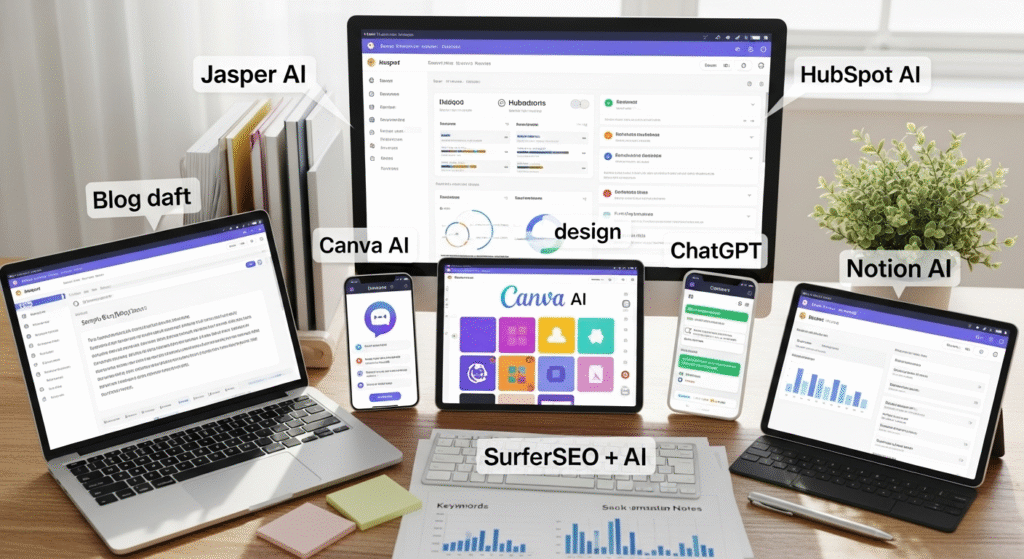
AI tools are now an essential part of running an online business. They save time, improve results, and make tasks easier for both small and large businesses. In 2025, there are dozens of AI-powered platforms, but some stand out as the most useful and reliable. Let’s look at six of the best AI tools that every entrepreneur should try this year.
1. Jasper AI (Content Creation)
One of the hardest parts of running an online business is creating content regularly. Whether it’s blog posts, product descriptions, ads, or social media updates, writing takes time and energy. Jasper AI is designed to solve this problem.
Features:
- Can write long-form blog articles in minutes.
- Creates ad copy for Facebook, Google, or LinkedIn campaigns.
- Generates captions, emails, and product descriptions.
- Offers templates for different tones and writing styles.
Benefits:
- Saves hours of writing time.
- Helps business owners who are not confident writers.
- Creates professional, engaging, and SEO-friendly content.
- Consistent tone across different platforms.
Best For:
Entrepreneurs, marketers, and small businesses that need to publish content often. If writing takes up too much time in your day, Jasper AI can keep your marketing running smoothly.
2. Canva AI (Design)
Design is a key part of branding, but not everyone can afford a graphic designer. That’s where Canva AI comes in. It allows users to create professional designs in minutes, even with no design skills.
Features:
- AI-powered text-to-image tool for custom graphics.
- Smart design suggestions for layouts and branding.
- Pre-made templates for social media, ads, and presentations.
- Background remover and instant resizing options.
Benefits:
- Makes branding easy and affordable.
- Quick turnaround for marketing visuals.
- Consistent designs that match your brand identity.
- Saves money compared to hiring designers for every project.
Best For:
Small business owners, social media managers, and anyone who needs high-quality visuals quickly. Canva AI is perfect if you want your business to look professional without spending hours on design.
3. ChatGPT (Customer Support & Ideas)
Good customer service is vital, but not every business can hire a full support team. ChatGPT is one of the best AI tools for handling instant responses and brainstorming ideas.
Features:
- Can answer customer questions in real time.
- Helps brainstorm new marketing campaigns, blog ideas, or email strategies.
- Can be customized to match a brand’s tone.
- Integrates with chat platforms and websites.
Benefits:
- Provides fast, 24/7 customer support.
- Reduces workload for business owners.
- Helps with creative brainstorming when stuck.
- Builds stronger customer relationships through quick responses.
Best For:
Startups, online shops, and service providers who want to improve customer service without a big support team. Also great for entrepreneurs looking for fresh marketing ideas.
4. HubSpot AI (CRM & Automation)
Managing customers, sales pipelines, and marketing campaigns can be overwhelming. HubSpot AI brings automation to customer relationship management (CRM) and helps businesses grow faster.
Features:
- Automates email sequences and follow-ups.
- Predicts which leads are most likely to convert.
- AI-driven insights on customer behavior.
- Workflow automation for sales and marketing tasks.
Benefits:
- Saves time by reducing manual data entry.
- Helps sales teams close deals faster.
- Provides a clearer view of customer needs and preferences.
- Improves efficiency across marketing and sales departments.
Best For:
Medium to large businesses, sales teams, and marketing agencies that need a powerful tool to manage leads and customers. HubSpot AI is also ideal for businesses looking to scale quickly with automation.
5.SurferSEO + AI (SEO Optimization)
Ranking on Google is one of the best ways to get free traffic, but SEO can be complicated. SurferSEO + AI combines artificial intelligence with powerful SEO strategies to make optimization easier.
Features:
- Analyzes top-ranking pages for chosen keywords.
- Gives AI-driven suggestions on word count, structure, and headings.
- Content editor that helps writers stay SEO-friendly.
- Integration with Google Docs and WordPress.
Benefits:
- Improves chances of ranking higher on search engines.
- Saves time by showing exactly what’s needed in each article.
- Helps even beginners write SEO-friendly blogs.
- Boosts organic traffic without paying for ads.
Best For:
Bloggers, content marketers, and business owners who rely on organic search traffic. SurferSEO + AI is especially helpful if you want to write blogs that rank faster and bring in consistent leads.
6. Notion AI (Productivity & Planning)
Running a business means juggling many tasks—planning, meetings, content schedules, and financial tracking. Notion AI helps entrepreneurs stay organized and productive.
Features:
- Creates instant summaries of notes and documents.
- Generates task lists and reminders.
- Brainstorms content ideas and project plans.
- Helps organize workflows in one central space.
Benefits:
- Reduces time spent on planning and writing notes.
- Keeps projects organized for teams and individuals.
- Improves focus by bringing everything into one platform.
- Easy to use for both personal and business tasks.
Best For:
Entrepreneurs, freelancers, and teams who need better organization. Notion AI is perfect if you want a simple but powerful tool to plan projects and stay on track.
Pros and Cons of Using AI Tools
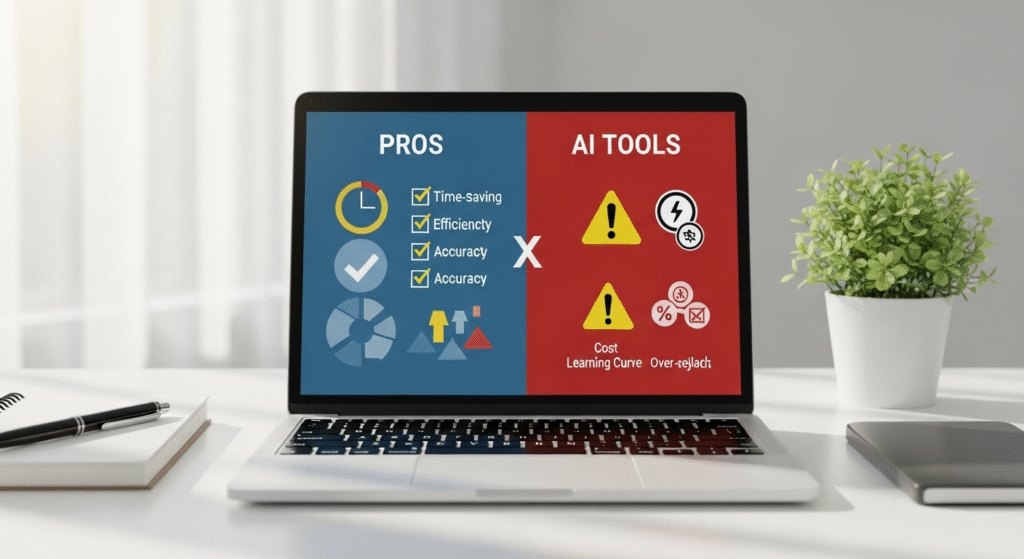
Every business decision comes with upsides and downsides, and the same applies to AI tools. On the positive side, they save a huge amount of time by handling repetitive tasks like writing, customer replies, or scheduling. This allows business owners to focus more on growth and strategy instead of being stuck in day-to-day operations. AI tools also help lower costs since you don’t always need to hire a full team for every task. Accuracy improves as well, with data analysis and automation reducing human errors. Finally, scalability is easier; AI tools can grow with your business, supporting more tasks as you expand.
However, there are some challenges to keep in mind. Many AI tools require a learning curve, meaning you’ll need time to understand how to use them effectively. Subscription costs can also add up, especially if you’re using multiple platforms. Another risk is over-reliance—depending too much on AI tools without adding human input may make your business feel robotic or lose its unique voice. To avoid this, it’s best to balance technology with personal creativity and judgment.
How to Choose the Right AI Tool for Your Online Business?
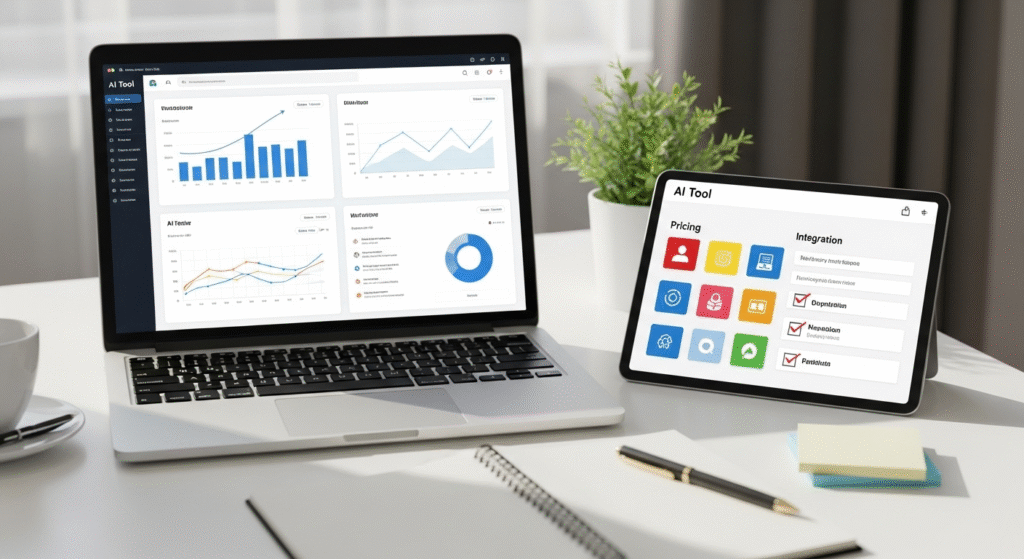
With so many AI tools available, choosing the right one can feel overwhelming. The first step is to consider your business size and budget. Small businesses or solo entrepreneurs may only need one or two AI tools for content or customer service, while larger teams might invest in multiple platforms for automation and analytics. Understanding your financial limits will help you avoid paying for features you don’t actually need.
Next, identify your biggest challenge. Do you struggle more with content creation, customer engagement, or workflow automation? Focusing on your pain points makes it easier to select the most effective AI tools. Many platforms offer free trials or limited versions, so it’s a smart idea to test before committing to a paid plan. This lets you explore features without financial pressure.
Integration is another important factor. The best AI tools work smoothly with systems you already use, such as CRM software, social media platforms, or project management apps. Choosing tools that connect easily will save you time and reduce confusion.
Future of AI in Online Business Growth

The future of online entrepreneurship is being reshaped by AI tools. Over the next five years, businesses will increasingly rely on them for everything from customer support to advanced data insights. Early adopters will gain a huge advantage, as they’ll already understand how to use these systems effectively while competitors are still catching up. Companies that learn to combine technology with strategy will scale faster and serve customers more efficiently.
One major prediction is that AI tools will become even more specialized. Instead of general platforms, we’ll see highly focused solutions designed for certain industries, like e-commerce, coaching, or creative services. This means businesses will have access to tools that understand their exact needs. Another trend is smarter automation; AI tools will not just perform tasks but make proactive suggestions to improve business results.
At the same time, balance will remain important. While AI tools offer speed and accuracy, human creativity and emotional connection can’t be replaced. The most successful businesses will be those that use AI tools to handle routine work while keeping people involved in creative strategy, branding, and customer relationships.
Conclusion
AI tools are changing the way online businesses grow by making tasks faster, easier, and more cost-effective. From saving time to boosting accuracy, they give entrepreneurs the edge needed in today’s competitive market. While challenges like learning curves and costs exist, the benefits far outweigh the downsides. Choosing the right tools, testing them, and using them alongside human creativity ensures lasting success. In the years ahead, businesses that adopt AI tools early will stay ahead of the curve. The best step you can take today is to pick one tool, start experimenting, and let technology support your business growth journey.
FAQs
What is the best free AI tool for online business in 2025?
The best free AI tool in 2025 depends on your business needs. Many people use ChatGPT free version for content and ideas. Canva AI is also popular for creating graphics at no cost. HubSpot offers free AI tools for marketing and customer service. The right free AI tool is the one that saves you time without spending money.
Can AI replace human jobs in online businesses?
AI tools can take over simple and repetitive tasks. They help with emails, customer support, and data entry. However, AI tools cannot replace human creativity and decision-making. Businesses still need people for strategy and personal connections. So, AI tools work best when combined with human skills.
How much do AI tools cost for small businesses?
The cost of AI tools for small businesses varies widely. Some AI tools are free with limited features. Paid AI tools often start at $10 to $50 per month. Advanced AI tools with more options may cost $100 or more. Small businesses should pick AI tools that match their budget and goals.
Is AI safe to use for sensitive business data?
Most AI tools use strong security to protect business data. Still, safety depends on choosing trusted AI tools. Always check if the AI tools follow data privacy laws. Avoid putting highly sensitive data into free or unknown tools. When used carefully, AI tools are safe for most businesses.
Do I need tech skills to use AI in my business?
Many AI tools are designed to be simple and easy to use. You don’t need advanced tech skills to get started. Most AI tools have guides and tutorials for beginners. With practice, anyone can use AI tools for business tasks. So, even non-technical people can benefit from AI tools.