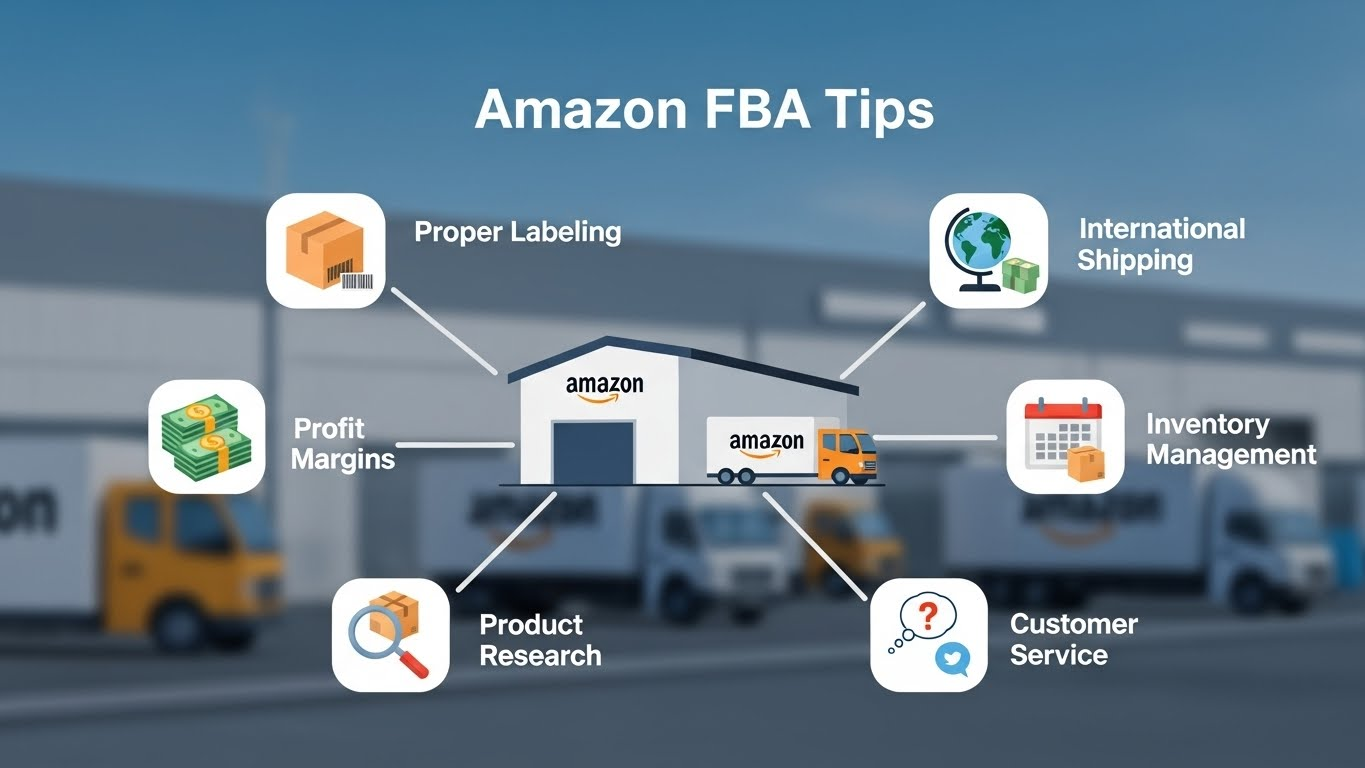
Amazon FBA Tips are becoming more valuable than ever as online shopping continues to grow in 2025. With increasing competition on Amazon, sellers need smarter strategies to stand out, boost sales, and run their business more efficiently. Whether you’re a beginner or already selling, understanding the latest trends and best practices can help you avoid common mistakes and grow faster.
In this guide, you’ll discover practical and easy-to-follow methods to improve your product visibility, optimize listings, manage inventory, and increase profits. These Amazon FBA Tips will help you build a stronger brand presence, attract more buyers, and scale your online business with confidence in today’s fast-changing e-commerce world.
Product Research and Selection
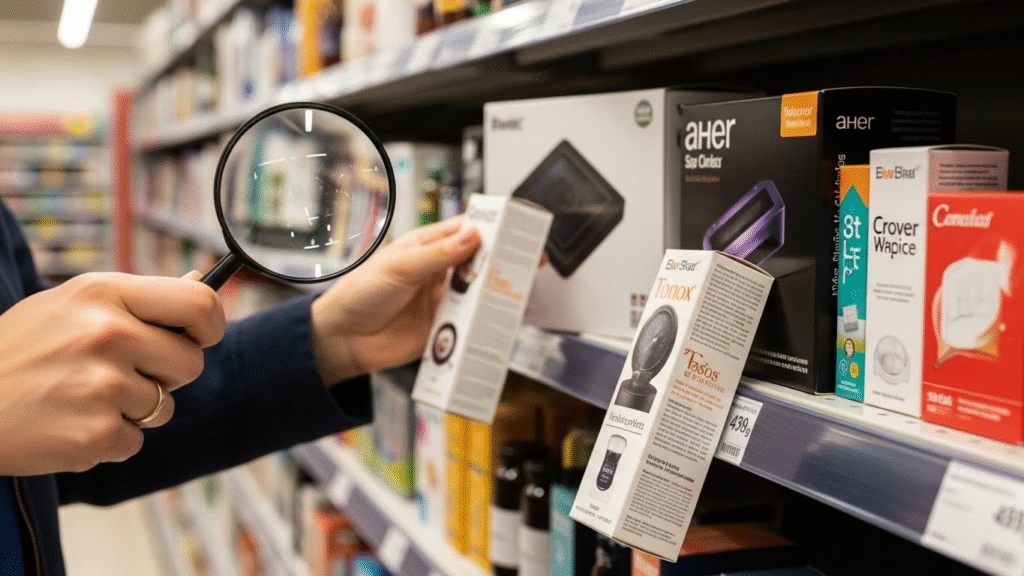
One of the most important Amazon FBA Tips for new and experienced sellers is understanding how to choose the right products. Good product research lays the foundation for long-term success. Instead of guessing what will sell, smart sellers rely on data, tools, and competitor insights. The goal is to find items that are profitable, have manageable competition, and show steady demand throughout the year.
Start by exploring niches where customers are actively searching but not overwhelmed with too many sellers. Tools like Helium 10, Jungle Scout, and AMZScout make this easier. They help you analyze search volume, estimated sales, difficulty level, and pricing trends. Following this approach ensures you avoid high-risk products and can confidently introduce items with realistic profit potential. These tools are essential parts of modern Amazon FBA Tips because they remove guesswork from decision-making.
Next, study market demand and seasonal cycles. Some items peak during holidays, summer, or back-to-school months. Understanding these patterns helps you maintain better inventory control and avoid stockouts. Look for evergreen products—items that sell consistently year-round since they provide stable income.
Competitor analysis also plays a major role. Study other sellers to see their pricing, customer reviews, listing quality, and strengths or weaknesses. Identify gaps you can fill, such as offering better packaging, improved functionality, or bundles. Strong competition doesn’t mean you should avoid a product; it simply means you must offer extra value.
Optimizing Product Listings for Higher Conversions
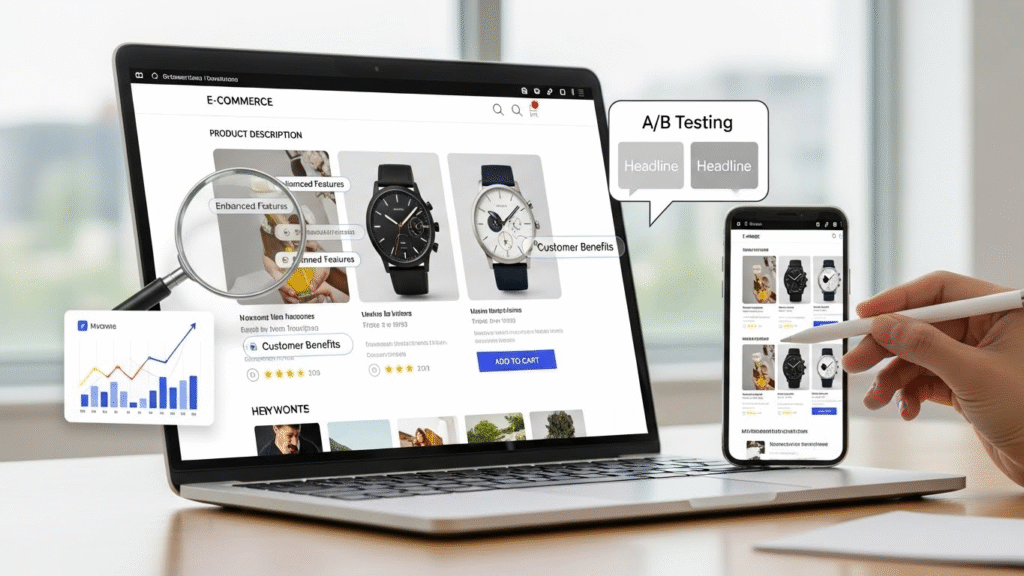
Improving your listing is one of the most valuable Amazon FBA Tips for boosting conversions and increasing visibility. A well-optimized listing helps your product rank higher and persuades customers to buy. The first step is writing strong, keyword-rich titles and descriptions. Use relevant search terms naturally while making the title clear and appealing. Avoid stuffing keywords, focus on explaining what the product is and why it’s useful.
Your bullet points should highlight the most important features and benefits. Many sellers list features only, but customers want to understand how those features improve their daily lives. This is one of the simplest yet most powerful Amazon FBA Tips for increasing conversions. Clear bullet points make your listing easy to skim and help customers make fast decisions.
Images are just as important as text. Use professional-quality photos showing the product from multiple angles. Lifestyle photos, which show the product being used, help customers visualize how it fits into their lives. Including comparison images, size charts, or infographics can also increase buyer confidence. These visual elements often determine whether someone chooses to buy from you or a competitor.
If you’re brand registered, take advantage of A+ Content. This feature allows you to add enhanced descriptions, comparison tables, and high-quality visuals. A+ Content helps tell your brand story, builds trust, and reduces bounce rates. Many sellers report higher conversion rates instantly after adding enhanced content, which is why it’s frequently recommended in Amazon FBA Tips.
Make sure backend keywords are also optimized. These invisible keywords help Amazon understand your product better and improve your ranking without affecting your customer-facing content.
Pricing Strategies for Competitive Advantage
Pricing your products correctly is another essential part of successful selling, and it’s one of the most important Amazon FBA Tips for staying profitable and competitive. A good pricing strategy helps you attract more customers while still protecting your profit margins. The key is finding the balance between affordability and long-term sustainability.
Start with dynamic pricing, adjusting your price based on demand, competitor behavior, and market conditions. Many sellers use automated pricing tools to update prices in real time without manual work. This method helps you stay competitive, especially in categories where prices change rapidly. Following dynamic pricing is one of the most practical Amazon FBA Tips because it prevents you from losing sales to small price differences.
Analyzing competitor pricing is equally important. Study the top sellers in your niche and compare their prices to your costs and target profit. If competitors are offering bundles, freebies, or enhanced packaging, you may need to adjust your price or offer added value. Matching the lowest price is not always necessary; offering better quality or better branding can justify a slightly higher price.
Coupons and deals are powerful tools to attract buyers. Limited-time discounts create urgency and help new products gain momentum. Amazon’s built-in coupon system highlights your offer with a green tag, increasing click-through rates. Many Amazon FBA Tips emphasize using deals strategically, not too often, but during product launches, holidays, or market slowdowns.
Amazon SEO and Keyword Optimization

Mastering Amazon SEO is one of the most important Amazon FBA Tips for improving product visibility and increasing sales. Unlike traditional search engines, Amazon’s SEO is driven mainly by buyer behavior and purchase intent. The more relevant and useful your listing is, the higher your chances of ranking. One of the first steps in optimization is using the right keywords both front-end and back-end. Backend keywords are invisible to shoppers but crucial for helping Amazon understand your product more clearly.
Use all available backend keyword space, but avoid repeating terms already in your title or bullet points. Include alternative spellings, related keywords, and phrases buyers may search for. This is one of the smartest Amazon FBA Tips because it expands your reach without crowding your product listing.
Next, focus on both short-tail and long-tail keywords. Short-tail keywords bring high volume but have stronger competition. Long-tail keywords may have lower search volume, but they often convert better because shoppers typing longer phrases know exactly what they want. A good mix of both types strengthens your ranking strategy. Updating outdated keywords regularly is another important practice. Search habits change, and new trends appear, so refreshing your keywords keeps your product relevant.
To optimize efficiently, study Amazon’s A9 Algorithm. A9 prioritizes products based on relevance, sales history, conversions, and customer satisfaction. This means optimized titles, clear bullet points, and a high-performing product all work together. Strong customer photos, positive reviews, and low return rates help you climb the rankings faster. Following these Amazon FBA Tips ensures you align your listings with what the algorithm prefers.
Inventory Management and Demand Forecasting
Managing inventory effectively is one of the most practical Amazon FBA Tips because running out of stock or overordering can significantly affect your profits. Stockouts not only stop your sales but also hurt your organic ranking. When your product goes unavailable, Amazon reduces your visibility, and it can take weeks to recover. On the other hand, overstocking can raise storage fees and tie up your cash flow, making it harder to scale.
Start by tracking demand patterns. Look at your sales velocity, trending periods, and seasonal shifts. Smart forecasting helps you predict how much stock you need and when to reorder. Many sellers use Amazon’s Inventory Performance tools or third-party forecasting systems to calculate restocks accurately. These tools recommend restock timelines, required units, and replenishment priorities, making them essential in modern Amazon FBA Tips.
Avoiding stockouts requires careful planning. Set reorder alerts and maintain safety stock for high-demand items. Consider lead time—the time it takes from placing your order to receiving inventory at Amazon’s warehouse. Long lead times require even more careful planning, especially for overseas suppliers. Overstocking is another issue to avoid because Amazon storage fees increase dramatically during certain periods, especially Q4. Keeping your stock balanced protects you from unnecessary charges.
Using FBA restock tools is also helpful. Amazon now provides restock recommendations, excess stock alerts, and storage reports. Pair these insights with your own data to make better decisions. A helpful Amazon FBA Tips strategy is breaking large orders into smaller, more frequent shipments to keep inventory fresh and flexible.
Advertising and PPC Campaigns
Running effective PPC campaigns is one of the most essential Amazon FBA Tips for scaling your business fast. With so much competition on the marketplace, paid advertising helps you gain visibility, drive more traffic, and improve your product ranking. Amazon offers three main ad types: Sponsored Products, Sponsored Brands, and Sponsored Display ads. Each serves a different purpose and can be used together for stronger results.
Sponsored Products ads target specific keywords or products and appear directly in search results. This is the most commonly used ad type because it drives high-intent traffic. Sponsored Brands ads showcase your brand with a banner-style placement, helping build recognition and attract shoppers to your store. Sponsored Display ads allow you to re-target customers on and off Amazon, which is extremely effective for reminding customers about your products. Combining these formats is one of the most strategic Amazon FBA Tips for strong advertising performance.
To succeed with PPC, set up a clear campaign structure. Use automatic campaigns to gather keyword data and manual campaigns to refine targeting. Separate campaigns by match type—broad, phrase, and exact—to keep performance clean and trackable. Good organization helps you control spending and optimize better.
Bid optimization is another key area. Start with moderate bids, then adjust based on performance. Increase bids for high-converting keywords and reduce or pause keywords that waste money. Always check your ACOS (Advertising Cost of Sales) and ROAS (Return on Ad Spend) to understand profitability. Reviewing search term reports weekly is one of the most valuable Amazon FBA Tips, as it reveals new keywords and removes expensive, low-performing terms.
Building a Strong Amazon Brand
Building a strong and memorable brand is one of the most valuable Amazon FBA Tips for long-term success in 2025. A well-built brand helps you stand out from endless competition, win customer trust, and increase repeat purchases. Amazon makes branding easier through Brand Registry, which gives you access to powerful tools such as A+ Content, video listings, and protection from counterfeit sellers. To access Brand Registry, you need a registered trademark, which also helps protect your brand identity and prevents others from copying your products or listing under your name.
Trademark protection is more than a legal requirement—it is a business investment. Once your brand is protected, you can sell with confidence and expand into new product lines without worrying about hijackers. Strong branding also increases customer loyalty, which is one of the most effective Amazon FBA Tips because loyal customers cost less to retain than finding new ones. Build trust through consistent packaging, helpful product inserts, and excellent customer service. Every interaction should reflect your brand’s personality and values.
A consistent brand experience across product listings, social media, and packaging strengthens your reputation. Use the same colors, fonts, and messaging so customers recognize your brand instantly. High-quality images, professional videos, and engaging A+ Content all help create a polished appearance that boosts conversions.
A strong Amazon brand also performs better in organic ranking because customers who trust your brand buy faster, review more, and return less. These signals help Amazon’s algorithm push your listings higher. When combined with other smart Amazon FBA Tips, branding becomes a long-term growth engine.
Leveraging Customer Reviews and Social Proof
Harnessing the power of customer reviews is one of the most important Amazon FBA Tips because reviews directly affect ranking, conversions, and customer trust. Shoppers rely heavily on genuine feedback before purchasing any product. This means that the more positive and authentic reviews you collect, the easier it becomes to convert visitors into buyers. To get consistent reviews, focus on creating a high-quality product that exceeds expectations. Happy customers are naturally more willing to leave positive feedback.
You can also encourage reviews using Amazon-approved follow-up emails or the “Request a Review” button in Seller Central. It’s important to remain professional and avoid manipulative language, Amazon’s guidelines are strict. Effective follow-up messages thank the customer, offer support, and politely ask for feedback. This is one of the simplest yet powerful Amazon FBA Tips for building long-term credibility.
Handling negative reviews is also crucial. Instead of ignoring them, respond calmly and professionally. Apologize where needed, offer solutions, and learn from the complaint. Negative reviews often highlight areas for improvement. When you use feedback to enhance your product, your overall rating increases over time. Turning complaints into improvements is one of the most strategic Amazon FBA Tips, especially for brand growth.
Social proof goes beyond reviews. Use customer photos, testimonials, and Q&A sections to strengthen trust. Encourage customers to upload images and videos by creating great unboxing experiences and including helpful product inserts. Strong social proof signals quality and reliability, helping customers feel confident about purchasing your product.
Expanding Beyond Amazon
Expanding your reach outside Amazon is one of the smartest Amazon FBA Tips for building a stable and diversified business. While Amazon is a powerful marketplace, relying on a single platform can limit your long-term growth. Successful sellers often build their own ecosystems through websites, email lists, and social channels. One of the best ways to expand is by creating your own website or Shopify store. This gives you full control over branding, customer data, and pricing strategies without Amazon fees.
A separate website also increases customer trust because your brand appears more established. You can showcase product guides, blogs, videos, and detailed information that Amazon listings don’t allow. These strategies complement other Amazon FBA Tips by building a multi-channel presence.
Social media plays a big role in expansion. Platforms like Instagram, TikTok, Facebook, and YouTube help drive free traffic to your brand. Social audiences become loyal supporters when they see consistent content, behind-the-scenes videos, customer testimonials, and product demonstrations. Growing a strong social presence helps you build an audience that follows your brand, not just your Amazon store.
Email marketing is another essential tool. Amazon does not allow direct access to customer email addresses, so building a list outside the platform is critical. With email marketing, you can send product announcements, exclusive discounts, and educational content. This helps you retarget previous customers and build a long-lasting community.
Tips for Scaling Your Amazon FBA Business in 2025
Scaling your business requires smart systems, strategic planning, and efficient processes. One of the most practical Amazon FBA Tips for growth is outsourcing tasks. As your store expands, you can’t handle everything yourself. Hiring virtual assistants for product research, PPC management, listing optimization, and customer service saves valuable time and reduces stress. This allows you to focus on strategy and expansion instead of daily tasks.
Another essential growth strategy is using AI tools. AI can speed up keyword research, improve PPC optimization, and help generate listing content. Many sellers now rely on AI analytics to understand buyer behavior, forecast trends, and identify high-profit products faster. Integrating AI is one of the most modern Amazon FBA Tips because it boosts productivity and reduces errors.
Partnering with influencers is another powerful scaling method. Influencers introduce your product to new audiences, create social proof, and help your brand gain credibility. Micro-influencers, in particular, offer affordable promotions with strong engagement rates. Their audiences trust their recommendations, making influencer collaborations a valuable asset.
Automating parts of your business is also necessary for scaling. Automate tasks like keyword tracking, review requests, email follow-ups, inventory alerts, and PPC bidding. Automation reduces manual work and keeps your business running smoothly even when you’re not actively managing it.
Conclusion
Growing a successful Amazon FBA business in 2025 comes down to smart planning, consistent optimization, and understanding what your customers truly want. When you focus on strong product research, optimized listings, competitive pricing, and reliable inventory management, you create a foundation that steadily increases sales. Pair this with great customer service, well-timed promotions, and thoughtful branding, and your store becomes more trustworthy and easier to scale. The key is staying flexible, learning from data, and adjusting your strategies as the market changes. Keep improving a little every day, and your Amazon FBA business can grow into a profitable, long-term online brand.
FAQs
How much money do I need to start an Amazon FBA business?
You can start an Amazon FBA business with a small budget, but it depends on your product choice and marketing plans. Many beginners start with $500–$2,500 for inventory, shipping, packaging, product photos, and basic advertising. As long as you research products wisely and avoid over-ordering at the start, you can keep costs low. Start small, learn the process, and then reinvest your earnings to scale your business steadily.
Is Amazon FBA suitable for complete beginners?
Yes, Amazon FBA works well for beginners because Amazon handles storage, packing, shipping, and customer service. Your main responsibilities are choosing a product, creating a good listing, and managing your inventory. It takes time to learn everything, but beginners can succeed by following proven steps and being patient. With consistent effort, simple research skills, and willingness to learn, even new sellers can build a strong business on Amazon over time.
Can Amazon FBA be done while working a full-time job?
Absolutely. Many sellers run their Amazon FBA business part-time while keeping their full-time job. Since Amazon manages most of the logistics, you only need to handle product research, listings, ads, and inventory restocking. These tasks can be done during evenings or weekends. Once your system is set up, it becomes easier to maintain. With discipline and good planning, a full-time job won’t stop you from growing a successful Amazon FBA business.
How long does it take to become profitable with Amazon FBA?
Profitability depends on your product choice, competition, and marketing strategy. Some sellers see profits in 1–3 months, while others need 6 months or more to break even. The key is choosing a product with real demand and managing costs carefully. Running small test orders helps reduce risk. If you reinvest your early profits back into inventory and advertising, you can grow faster. Patience and consistent learning are essential for long-term success.