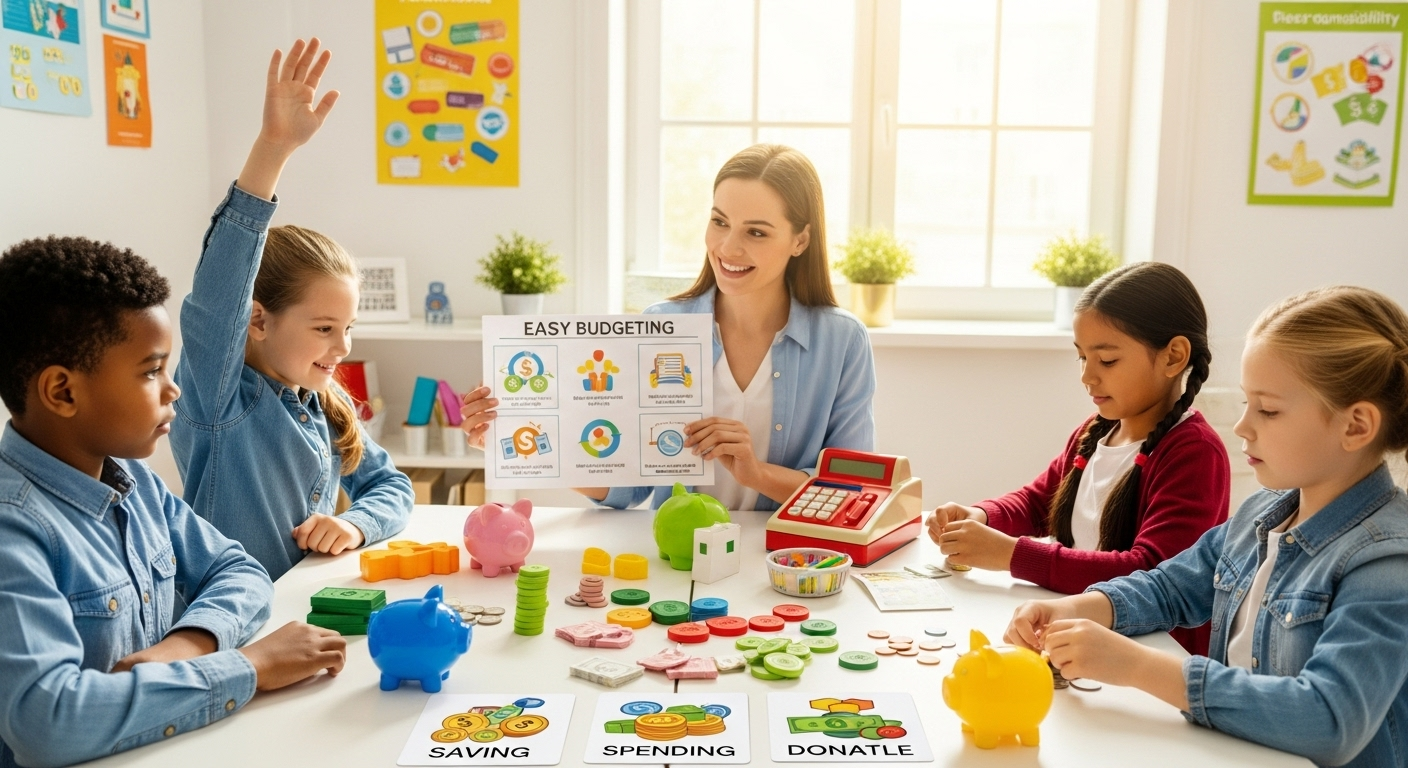
Teaching Kids About Money is an essential skill that helps children develop responsible financial habits from an early age. Understanding the value of money, the difference between needs and wants, and the importance of saving are key lessons that shape their future decision-making. By introducing these concepts in simple, practical ways, parents can make learning about money engaging and meaningful. Early financial education lays the foundation for independence, critical thinking, and long-term money management skills.
Parents can make money lessons fun by incorporating games, interactive activities, and real-life experiences. Using allowances, goal-setting exercises, and playful simulations allows children to practice budgeting, spending wisely, and saving for future needs. This guide explores creative, practical strategies that every parent can try to teach kids about money effectively, turning everyday moments into valuable learning opportunities while fostering smart financial habits that last a lifetime.
Start with Basic Money Concepts
Teaching kids about money begins with the basics. Children need to understand coins, bills, and their value before they can manage it responsibly. Introduce them to different denominations and explain how smaller coins add up to larger amounts. Using real money or play money can make learning interactive and hands-on. Kids can practice counting, sorting, and exchanging money in simple games that reinforce the concept.
Another key idea is helping children distinguish between wants and needs. Wants are items they desire but do not necessarily require, like toys or treats. Needs are essential, such as food, clothing, and school supplies. Teaching kids about money includes showing the difference between these two concepts. This helps children make thoughtful decisions when spending.
Simple activities can reinforce spending and saving skills. For example, give children a small amount of money and let them decide how to split it between spending and saving. Set up a mini store at home, where kids “buy” items and track their money. Another idea is to create a savings jar for goals, letting children see how money grows over time. These activities make money tangible and easier to understand.
Use Allowances as Learning Tools
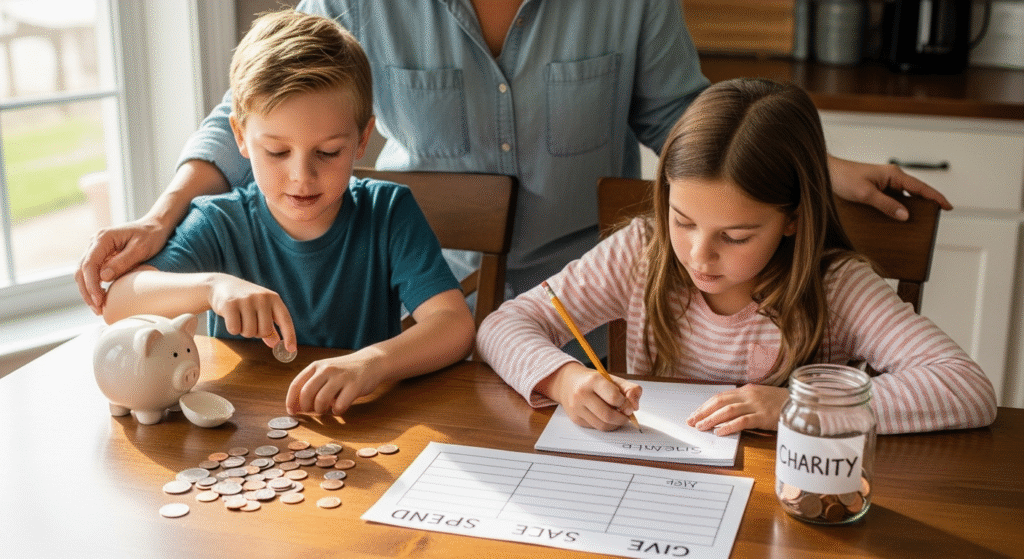
Allowances are an excellent way to teach kids about money in a practical way. Linking allowances to chores or tasks helps children understand that money is earned through effort. Simple chores like tidying up, helping with dishes, or organizing personal items can earn a small weekly allowance. This connection teaches kids the value of work and sets the stage for responsible money management.
Allowances also provide an opportunity to teach budgeting. Children can divide their allowance into categories such as spending, saving, and sharing. This encourages planning and prioritization, showing them how to make money work for different purposes. Small amounts of money are perfect for practicing these skills because mistakes have low consequences, but the learning is real.
Encouraging goal-setting is another key element. Kids can set short-term goals, like saving for a toy, and long-term goals, like a larger purchase or a special outing. Visual aids such as jars, charts, or digital apps help children track their progress. Celebrating milestones, even small ones, motivates kids to stick with their plans and reinforces positive money habits.
Introduce Saving and Goals
Teaching kids about money includes emphasizing the importance of saving. Children should learn that saving is just as important as spending. Introducing both short-term and long-term saving goals helps them plan for immediate wants, like toys or games, and future needs, such as electronics or larger projects. This builds patience and forward-thinking habits.
Using jars, piggy banks, or digital apps makes saving tangible. Kids can visually track the growth of their money, which motivates them to continue saving. For younger children, separate jars for different goals—like spending, saving, and giving—make concepts clear. Digital apps for older kids can provide interactive ways to track deposits and set reminders for saving targets.
Making saving fun is essential. Parents can introduce charts, stickers, or reward systems to celebrate progress. For example, reaching a savings goal can earn a small treat or special activity. This gamifies money management, making children excited about saving rather than feeling restricted. Positive reinforcement strengthens habits and ensures the lesson sticks.
Teach Smart Spending
Teaching kids about money involves showing them how to spend wisely. One key concept is comparing prices and evaluating choices. Children should learn that the same item can vary in cost at different stores, and making informed decisions ensures they get the best value. Simple exercises, such as comparing prices of snacks or toys, make this lesson concrete.
Delayed gratification is another important principle. Kids should understand that waiting to buy something often leads to better choices and allows them to save for higher-value goals. Parents can encourage children to wait for a sale or save for a few weeks before purchasing a desired item. This practice fosters patience and decision-making skills.
Role-playing shopping scenarios helps children practice responsible spending. Create a mini store at home or take children on small shopping trips where they make choices within a limited budget. Discuss the outcomes of their decisions, highlighting good practices and lessons learned. Kids learn that money is finite and thoughtful choices matter.
Introduce Basic Banking Concepts
Teaching kids about money includes introducing basic banking concepts. Children should learn what banks are, how they operate, and why people use them. Visiting a local bank can make this experience tangible. Kids can see tellers, ATMs, and safety deposit boxes, which makes banking less abstract. For families unable to visit in person, online videos or interactive apps can also explain banking in a simple, engaging way.
Understanding deposits and withdrawals is a key concept. Children should learn that money placed in a bank account is called a deposit, and money taken out is a withdrawal. Using a small allowance or savings account, parents can show how depositing regularly increases balance over time. Interest is another important idea—kids should know that banks sometimes pay money for keeping their funds in an account. Even simple examples, like a small monthly increase, make this understandable.
Checking and savings accounts can be explained in simple terms. A checking account is like a wallet for daily use, while a savings account is for longer-term goals. Using visual aids, such as jars labeled “checking” and “savings,” can reinforce this. Children can practice “depositing” money in each jar and tracking their progress.
Teach Earning and Entrepreneurship

Teaching kids about money also involves helping them understand the connection between effort and reward. Small jobs, like helping with household chores, can teach that money is earned, not simply given. Kids can also explore entrepreneurship through activities such as selling crafts, baked goods, or lemonade stands. These projects help children learn responsibility, planning, and money management.
Encouraging creativity is an important aspect of earning. Children can brainstorm ways to offer services or products in fun and safe ways. For example, organizing a mini craft sale or designing personalized cards can combine artistic skills with financial learning. Parents should guide kids on pricing, budgeting, and reinvesting profits.
Understanding effort and reward is reinforced through real-life experiences. Completing tasks successfully and earning money motivates children to work toward goals. They also learn that mistakes may happen, teaching resilience and problem-solving.
Use Games and Interactive Activities
Teaching kids about money is most effective when it is fun and interactive. Games and activities can make abstract concepts concrete. Board games, apps, and simulations allow children to practice spending, saving, and budgeting in a low-risk environment. This hands-on approach reinforces lessons in a playful way.
Interactive activities can include “store” role-playing, where children use play money to buy and sell items. Digital apps can simulate real-world money experiences, teaching kids about earning, saving, and investing. Friendly competition encourages engagement and allows children to apply what they have learned practically.
Parents can also create challenges, such as saving a set amount in a week or making smart purchasing decisions in a game. Rewarding success with praise or small incentives reinforces positive habits. Visual aids like charts, stickers, and progress boards make learning tangible and motivating.
Discuss Giving and Charity
Teaching kids about money includes discussing the importance of giving and charity. Children should understand that money can help others, not just themselves. Introducing simple ways to donate or share teaches empathy, compassion, and responsible financial choices.
Parents can start with small activities, such as donating a portion of allowance to charity or helping a local food bank. Kids can participate in choosing causes they care about. This practice reinforces values of generosity while showing that money can have a positive impact beyond personal use.
Charity also helps children learn budgeting. They must decide how much to save, spend, and share. This teaches planning and thoughtful decision-making. Family discussions about giving can reinforce lessons and build long-lasting habits.
Review and Celebrate Progress

Teaching kids about money is most effective when progress is reviewed and celebrated. Tracking savings, spending, and financial milestones allows children to see how their habits grow over time. Visual aids, like charts, jars, or digital trackers, can make progress tangible and motivating.
Positive reinforcement is crucial. Praising smart decisions, meeting goals, and showing improvement boosts confidence and encourages continued learning. Small rewards, such as stickers, special activities, or recognition, make children feel accomplished.
Regular reviews also provide an opportunity to discuss mistakes and lessons learned. Parents can guide children in adjusting goals, improving budgeting skills, and refining money habits. This consistent feedback helps reinforce responsibility and accountability.
Conclusion
Teaching kids about money is a vital step in building lifelong financial skills. By introducing basic concepts, earning opportunities, saving habits, smart spending, and giving, parents can make financial education practical and enjoyable. Using games, interactive activities, allowances, and real-life examples reinforces lessons while keeping children engaged. Reviewing progress and celebrating milestones further motivates kids to practice responsibility and thoughtful decision-making. Teaching kids about money early empowers them to manage finances confidently, make informed choices, and develop independence. With consistent guidance, patience, and creative strategies, children can grow into financially aware individuals capable of making smart money decisions throughout their lives.
FAQs
At what age should I start teaching kids about money?
You can start introducing basic money concepts as early as 3–5 years old. At this stage, children can recognize coins, bills, and simple values. Lessons should be hands-on, such as using play money, sorting coins, or small saving jars. As they grow, you can introduce more advanced concepts like budgeting, earning, and banking. Early exposure helps children develop financial literacy gradually and makes money concepts feel natural and understandable as they grow.
How much allowance is appropriate for children?
The right allowance depends on a child’s age and family budget. For younger children, small weekly amounts like $1–$5 can be enough for simple spending, saving, and sharing activities. Older children may receive slightly higher allowances tied to chores or responsibilities. The key is to teach money management, not provide large sums. Encourage children to divide their allowance into spending, saving, and giving categories. This practical experience builds habits that promote responsibility and smart financial choices.
How can kids learn about online money safely?
Introduce children to online money concepts gradually and under supervision. Start with simple explanations about online banking, digital wallets, and app-based savings tools. Ensure they understand safety rules, like never sharing passwords or personal information. Parents can use kid-friendly apps that simulate digital transactions or virtual allowances. Teaching kids about money online safely helps them adapt to modern financial systems, reinforces lessons about responsibility, and builds confidence in handling digital finances.
How do I encourage kids to save instead of spend?
Start by setting clear, achievable savings goals. Use jars, charts, or apps to make progress visible and rewarding. Teach delayed gratification by showing how saving over time allows them to buy bigger or more meaningful items. Provide encouragement, celebrate milestones, and lead by example with your own saving habits. Incorporating fun visuals or rewards reinforces the behavior. Teaching kids about money with structured saving strategies helps them value planning and patience while learning to make thoughtful spending decisions.